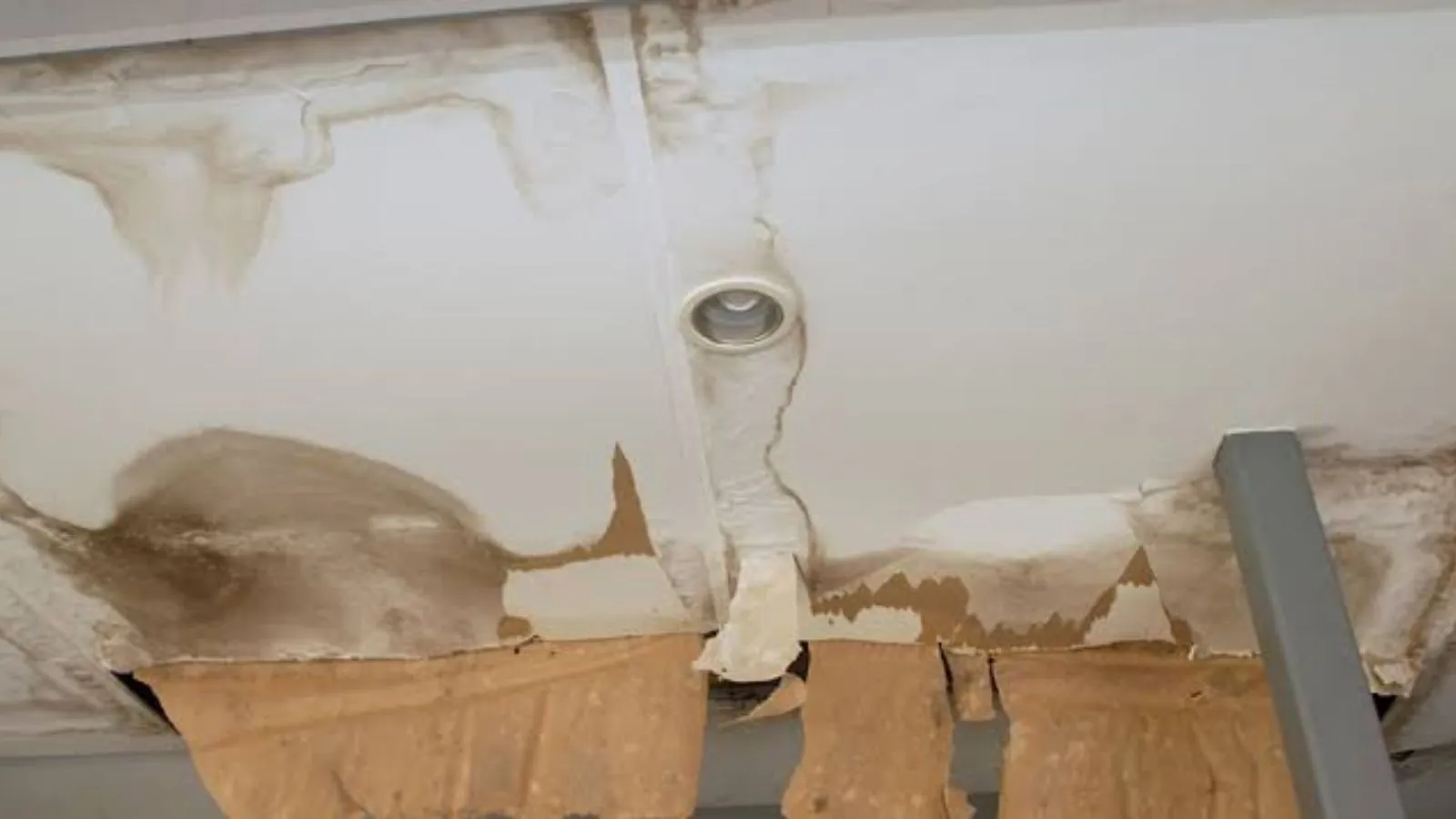
How wet drywall behaves
Gypsum board loses strength when saturated. It can wick water several inches above the visible line, and the paper facing feeds mold. Wet insulation inside the wall holds moisture long after the board looks dry.
Clean-water drywall that was wet briefly can sometimes be dried in place. Board that is soft, crumbling, delaminating or stained by contaminated water is removed.
| Wall condition | Typical action | Why |
|---|---|---|
| Damp, firm, clean water | Dry in place | Board keeps strength. |
| Soft, sagging or crumbling | Cut out | Structure is lost. |
| Contaminated water | Cut out above the line | Cannot be disinfected in place. |
| Wet insulation behind | Remove and replace | Holds water. |
Plaster walls in older buildings are discussed on the Historic District page.
Measured cuts and open cavities
We cut out wet board in straight, measured sections so the repair is easier. A flood cut removes drywall a set height above the floor. Insulation is removed from the cavity, and the studs and plates are dried.
Sometimes small holes allow air to be pushed into closed cavities to dry them without removing the board. The choice depends on readings and the water source. See burst pipe damage and ceiling damage for related cases.
Before you cut anything yourself
- Turn off power to the area, since wiring runs in walls.
- Wear a mask and gloves around wet insulation.
- Take photos before removing material.
Paint bubbling?
Call for a moisture check before painting.
Patching, texture and paint
Once the cavity is dry, the rebuild begins: new insulation, board, tape and mud, texture matching, priming and paint. Priming with a stain-blocking primer helps keep old stains from bleeding through.
Do not skip the dry readings. Fresh drywall over a damp cavity can grow mold behind the paint. Keep the drying log, which shows the cavity was ready.
Textures vary. Cedar City homes include smooth, knockdown and orange-peel finishes, and a good painter can match them or blend the repair across the wall.
Reading the stain: what shape and color tell you
A tan ring with a darker edge usually means repeated wetting. A fresh, uniform dark patch means recent water. Bubbles in the paint mean moisture is trapped behind the film. Vertical streaks beneath a window point to water running down inside the wall from the sill or the wall above.
The stain is only the visible edge. A moisture meter reveals how far the wetting extends, often a foot or more beyond the mark. We mark the boundary on the wall with a pencil so you can see the true size before any cut is made.
Look for the source in the room above, behind the wall or along a roof edge. A plumber or roofer fixes it. If a pipe is involved, the cavity may stay open until the repair is pressure-tested.
Mold behind the paint
Mold on the back of drywall paper can be present before it appears on the face. A musty smell without a visible stain is often the first clue. Small areas of surface growth on non-porous materials can be cleaned, but growth in drywall means the board is removed.
Keep the area closed and avoid sanding or scrubbing moldy board, since that spreads spores. If the area is larger than a few square feet, or you are sensitive to mold, ask us to inspect first, and see musty smell after water damage for what to do next.
What wall and drywall water damage repair depends on
Wall repair has two parts: drying or removal, and the rebuild.
Height of the wetting
Higher wicking means more board removed.
Insulation
Wet batts are replaced.
Water category
Contaminated water means removal.
Finish
Texture and paint matching are separate.
Access
Cabinets or fixtures along the wall add steps.
How insurance usually enters the picture
Sudden leaks are often covered, and the policy usually pays for drying and replacing damaged board. Slow leaks may not be. Photograph the damage and ask your insurer.
For a scope, call (844) 950-6900
Safety steps and the standard behind the work
What to do first: stop the source if it is safe to reach, keep people and pets out of wet rooms, and photograph the damage before anything moves. What not to do: do not touch wet outlets, do not walk through standing water near panels, and do not run a household vacuum on water. Professional drying practice is described in the ANSI/IICRC S500 standard for water damage restoration, which sets out water categories and drying goals. This page is general guidance, and a site visit is what confirms the actual scope.
Questions Cedar City homeowners ask
Sometimes if caught quickly, but trapped cavity moisture usually needs equipment.
Often higher than the visible stain. A moisture meter finds the edge.
Not always. Readings and the water source decide.
Only after the wall is dry and the source is fixed.
We dry and restore. A painter or drywall finisher handles the cosmetic work.