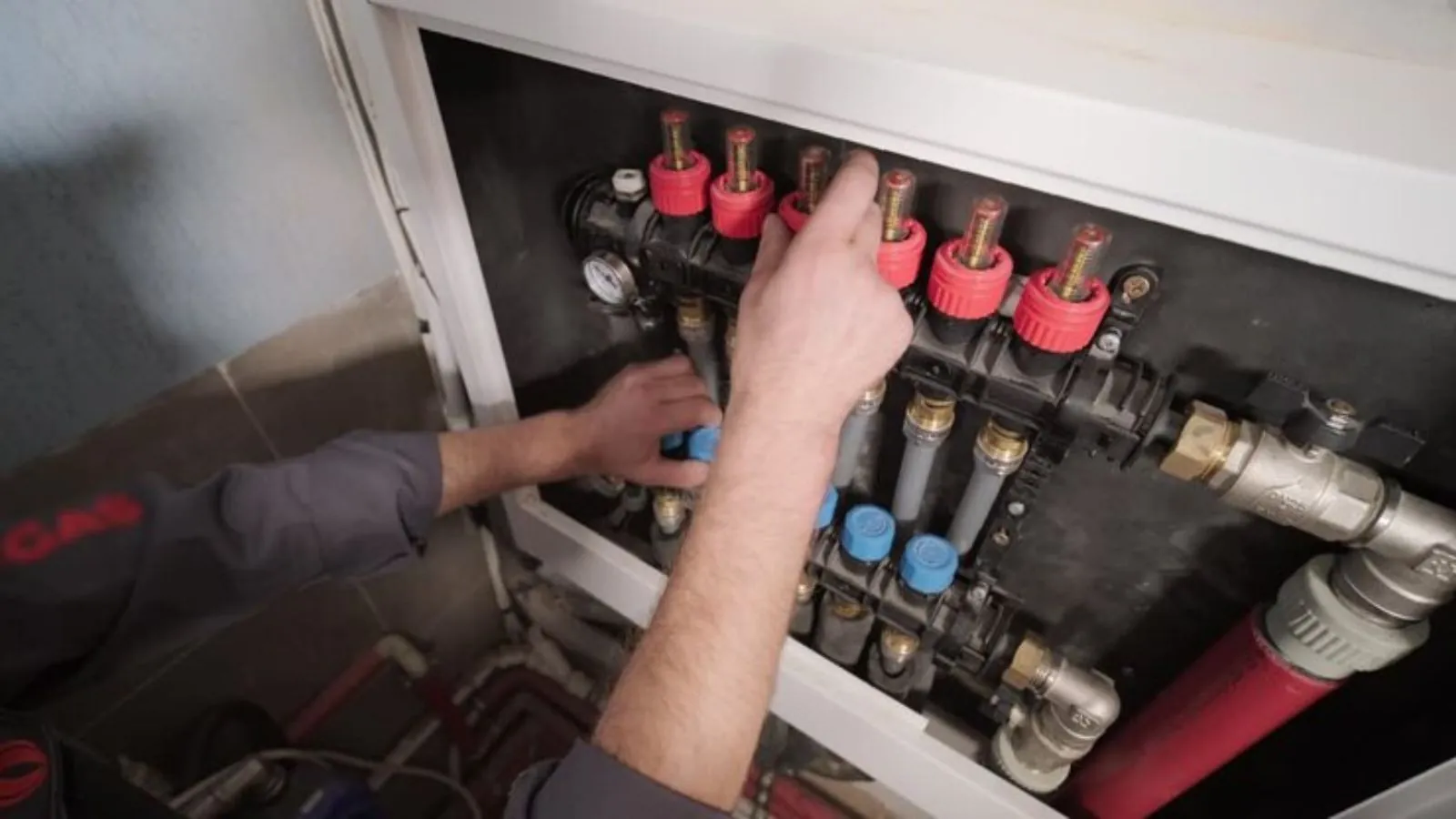
Shut it down safely first
The cold-water inlet valve on top of the tank closes the supply. For an electric unit, switch off the dedicated breaker. For gas, turn the gas control to off or pilot, and if you smell gas, leave the house and call the gas company or 911 first.
Do not touch a heater sitting in standing water if it is electric. Cut the breaker from a dry position, or wait for professionals. Hot water can scald, and a tank that has failed may still be warm.
Water heater emergency list
- Close the cold inlet valve and open a hot faucet upstairs to relieve pressure.
- Switch off power at the breaker or turn the gas control off. Leave if you smell gas.
- Keep children and pets away from the tank and hot water.
Why water heaters fail where they do
Tanks corrode from the inside, with sediment building up on the bottom and wearing the lining over the years. Most tank units last roughly 8 to 12 years, so an older one may leak at a seam, a fitting or the drain valve without warning. A slow drip from the relief valve or base is often the first sign.
Mineral scale is a common reason tanks wear out early, since sediment collects on the bottom and cooks against the lining. Draining the tank once a year, and checking the anode rod as your plumber advises, slows that wear. A scaled tank also runs less efficiently and can crack under stress.
Replacement is a plumber's job. Our work starts once the water is out of the tank and onto your floors, and it runs alongside the plumber so the new unit goes into a dry space.
Tank already off?
Call so drying can start before the water reaches the walls.
Where the water goes and what we do
A tank dump spreads across the slab or subfloor quickly. In a garage, it may run toward the drain or the door. In a basement, it pools and wicks into the base of drywall. In a closet or on a main floor, it heads for carpet, hardwood and cabinets.
We extract the water, remove wet baseboard and pad where needed, and set drying equipment. Where water has reached the walls, the cavity is opened and dried following wall and drywall repair practice.
| Heater location | Typical damage | What we check |
|---|---|---|
| Basement | Drywall base, carpet, stored items | Moisture in walls and finished areas. |
| Garage | Slab, stored goods, adjoining wall | Wall base shared with the house. |
| Closet or main floor | Carpet, hardwood, cabinets | Subfloor and flooring, see hardwood floor repair. |
| Attic | Ceiling below, insulation | See ceiling water damage. |
What a slow leak looks like
A slow leak from a water heater is easy to miss. Look for rust streaks at the base, a damp spot on the floor, a pooling puddle, or discoloration on the closet wall. Rust-colored water from hot taps can also indicate tank corrosion.
Check the pan under the tank, the relief valve line and the fittings once a season. If you find a persistent drip, schedule a plumber before it becomes a flood, and tell us if the area around it has felt damp, because wet drywall behind the heater is a hidden problem.
What water heater leak cleanup depends on
Most of these jobs are bounded by how much of the tank emptied and what it touched.
Volume released
A full tank dump costs more to extract than a slow weep.
Location
Basements and garages dry differently from finished rooms.
Flooring and contents
Carpet and stored boxes are often the loss.
Wall involvement
Wet drywall adds cutting, drying and rebuild.
Equipment days
Dehumidifiers and air movers are counted per day.
How insurance usually enters the picture
A sudden tank failure is often a covered event under a homeowners policy, while wear and gradual leaking often are not. Replacing the heater itself is generally not part of restoration. Ask your insurer what applies.
To scope yours, call (844) 950-6900
Safety steps and the standard behind the work
What to do first: stop the source if it is safe to reach, keep people and pets out of wet rooms, and photograph the damage before anything moves. What not to do: do not touch wet outlets, do not walk through standing water near panels, and do not run a household vacuum on water. Professional drying practice is described in the ANSI/IICRC S500 standard for water damage restoration, which sets out water categories and drying goals. This page is general guidance, and a site visit is what confirms the actual scope.
Questions Cedar City homeowners ask
Yes. Tanks fail at any hour. Call the 24/7 line after you close the supply valve and cut power or gas.
No. A licensed plumber does that. We dry and restore the area and work around the plumber's schedule.
Typical residential tanks hold 40 to 50 gallons, and a full release across a floor can reach walls quickly.
Usually it is clean supply water, though water sitting in a tank or a pan can pick up dirt. A technician will assess it on site.
Once readings are normal and the plumber has finished, yes. We document readings so you know when it is safe to rebuild.