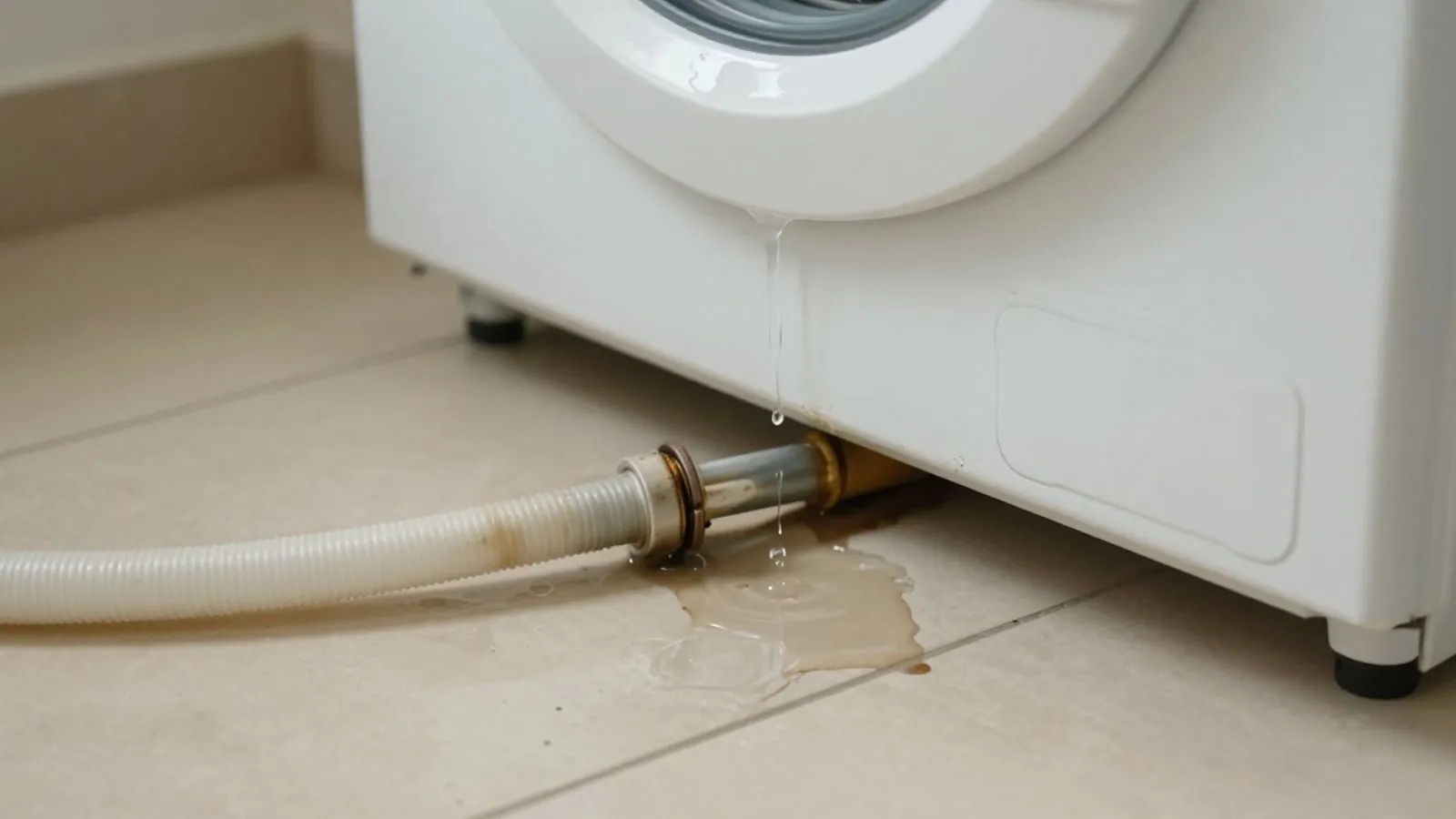
Find the valve, stop the flow
Washers have two supply valves behind the machine, one hot and one cold. Dishwashers and refrigerators typically use a small shut-off under the sink or behind the unit. Quarter-turn them closed. If you cannot reach them, shut the main.
Unplug the appliance only if the outlet and floor are dry. Otherwise cut the circuit at the panel. Then take photos of the hose, the valve and the wet area, because the failed part tells an insurer how the loss happened.
Before you touch a wet appliance
- Do not reach behind a machine standing in water.
- Turn off the breaker from a dry spot, or wait for help.
- Keep children away from appliance doors that might tip.
What fails, and where the water goes
The commonly failing parts are rubber supply hoses, hose fittings, drain hoses, door seals, pumps and ice-maker tubing. Hoses often fail at the connection when they are older, kinked, or pushed tight against a wall. A braided steel hose lasts longer but is not permanent.
Water from a laundry room or kitchen runs under cabinets, along baseboards and through floor penetrations. It often reaches the ceiling below before anyone sees a stain. A leak from an upstairs laundry is a frequent cause of ceiling damage in the room below.
| Appliance | Common failure | Where water tends to go |
|---|---|---|
| Washing machine | Supply hose or drain hose | Laundry floor, wall base, ceiling below. |
| Dishwasher | Door seal, inlet valve, hose | Under cabinets, subfloor, kitchen floor. |
| Refrigerator | Ice-maker line, water filter | Under the unit, floor, adjoining wall. |
| Water softener or filter | Fitting, brine line | Utility closet, garage floor. |
Valve is off?
Call so drying starts before water reaches the cabinet bases.
Hidden water under the appliance
A dishwasher or fridge leak may run for weeks before it is seen. Water collects under the unit and soaks the flooring, then sits on the subfloor. Swollen cabinet bases, soft flooring at the edge, or a musty smell near the appliance all suggest it has been going a while.
We pull the appliance if needed, dry the flooring and subfloor, and check the cabinet bases and wall behind. If the leak has been long-term, the work extends to kitchen water damage and any affected cabinets.
Reconnecting the appliance is a plumber or appliance technician task. We schedule around them so the unit goes back onto a dry floor.
Prevention that works in Cedar City homes
Replace rubber washer hoses with braided steel every five years or so, leave a few inches behind the machine, and shut off the washer valves when away. A water leak detector under the machine or fridge gives an early warning at modest cost.
Mineral buildup inside valves and fittings is a normal wear item, so check them occasionally for crusting. An older home may also have galvanized lines that corrode at fittings. A small drip is cheaper to fix than a flooded floor.
What appliance leak cleanup depends on
These losses are often small if caught early and larger if hidden.
Time it ran
A leak found in an hour differs from one running for days.
Flooring
Vinyl and tile dry easier than laminate, hardwood or carpet.
Cabinet and wall damage
Swollen bases and wet drywall add scope.
Level of the home
Upstairs leaks can reach the ceiling below.
Drying days
Equipment is counted per piece and per day.
How insurance usually enters the picture
Sudden appliance leaks are often covered by a homeowners policy, while slow, repeated seepage may not be. Keep the failed hose or part and photograph it, since an adjuster may ask about it.
For your scope, call (844) 950-6900
Safety steps and the standard behind the work
What to do first: stop the source if it is safe to reach, keep people and pets out of wet rooms, and photograph the damage before anything moves. What not to do: do not touch wet outlets, do not walk through standing water near panels, and do not run a household vacuum on water. Professional drying practice is described in the ANSI/IICRC S500 standard for water damage restoration, which sets out water categories and drying goals. This page is general guidance, and a site visit is what confirms the actual scope.
Questions Cedar City homeowners ask
Yes. A hose does not wait for business hours. Call the 24/7 line once the valve is closed.
Often, if it was sudden. Slow leaks are treated differently. Ask your insurer and keep the failed part.
Frequently, if moisture readings show it can be dried. Swollen or delaminating material usually has to be replaced.
Often yes, to dry beneath it. A technician can help disconnect and move it safely.
No. We dry and restore. Replacement is handled by you or an appliance technician.