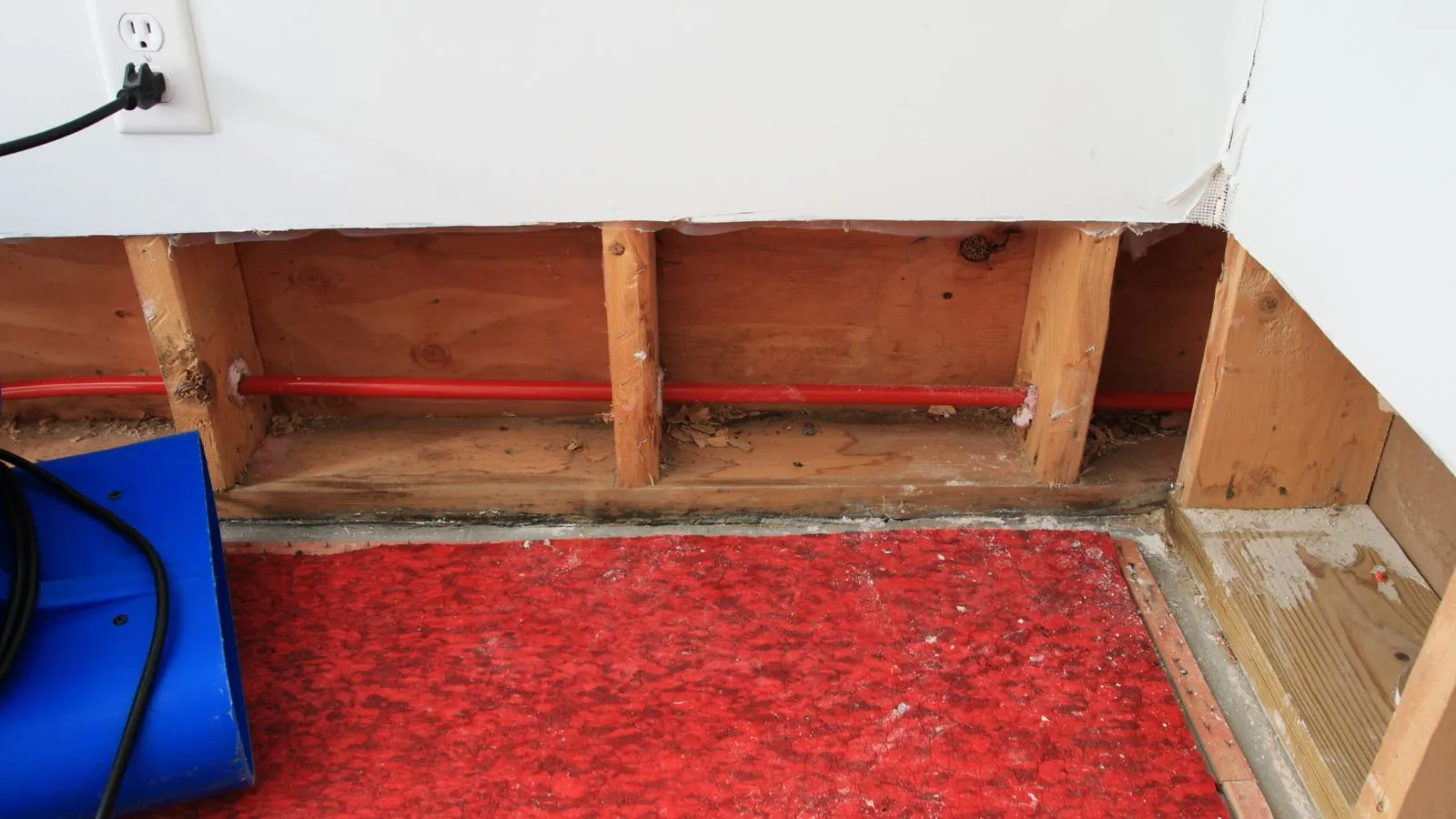
Why is my house still damp after the water is gone?
Wood, drywall, insulation and concrete absorb water and release it slowly. A floor that looks dry can still be holding moisture in the subfloor, and a wall can be wet behind paint. Without drying, that moisture feeds odors, swelling and mold.
Signs include a persistent musty smell, cool or clammy walls, peeling paint, cupped floors, warped baseboards and condensation on windows. If you notice any of these after a leak, ask for readings.
A simple check
Tape a square of plastic to a wall or floor for a day. Moisture under it means the surface is still releasing water. This is a rough clue, and a meter is more reliable.
How drying works
Drying has two parts: moving air across wet surfaces to evaporate water, and removing that moisture from the air with dehumidifiers. Air movers handle the first and refrigerant or desiccant dehumidifiers the second. Heat helps, particularly in cold weather.
A technician measures the starting moisture content with pin and pinless meters, a thermal camera and a hygrometer. Equipment is placed to suit the volume and the materials, and readings are taken each day to track progress.
| Equipment | Job | Notes |
|---|---|---|
| Air movers | Move air across wet surfaces | Placed along walls and floors. |
| Dehumidifiers | Remove moisture from the air | Sized to the room volume. |
| Injectidry or wall panels | Dry wall cavities | Used where walls stay closed. |
| Moisture meters | Record progress | Daily readings logged. |
Smell won't go away?
Call for a moisture survey.
Drying in the high desert
Cedar City's air is dry for much of the year, which helps evaporation, but monsoon season and winter conditions change that. In cold weather, materials hold moisture and release it slowly, so heated drying is more effective. Drying goals are set by comparing wet materials with a dry reference reading.
Most jobs run several days. The finish is a set of documented readings, not a clock. Equipment stays until each material meets the target.
Signs that something is still wet inside the walls
Moisture hides in places you cannot see. Common clues are a baseboard that has pulled away from the wall, paint that bubbles in a regular pattern, a door that suddenly sticks, or electrical outlets that feel cool. Hardwood that cups or crowns has taken on water from below.
A thermal camera helps because wet materials hold a different temperature from dry ones. It does not measure moisture, so we confirm with a meter. We also check across a wall at several heights, since water often collects at the bottom plate.
Ask your contractor for a drying log if one is available. A good log shows the date, the readings at each point, the equipment used and when targets were met. It turns drying from a guess into a record you can show an inspector.
What happens after drying
Once readings meet the target, equipment comes out and rebuilding can begin. If materials were removed, wall and drywall repair and flooring replacement follow.
Keep the daily logs. They support an insurance claim and show a buyer or inspector that the structure was dried properly, as discussed on selling a house after water damage.
What structural drying depends on
Drying is billed by equipment and days, so the plan matters more than a flat rate.
Wet area size
More volume needs more equipment.
Materials
Dense materials like hardwood and concrete take longer.
Starting moisture
Wetter materials need more days.
Weather
Cold or humid conditions slow drying.
Monitoring
Daily visits and logs are part of the scope.
How insurance usually enters the picture
Drying costs are commonly part of a covered water loss claim. Keep the daily logs and ask your insurer what documentation they need.
For a plan on your property, call (844) 950-6900
Safety steps and the standard behind the work
What to do first: stop the source if it is safe to reach, keep people and pets out of wet rooms, and photograph the damage before anything moves. What not to do: do not touch wet outlets, do not walk through standing water near panels, and do not run a household vacuum on water. Professional drying practice is described in the ANSI/IICRC S500 standard for water damage restoration, which sets out water categories and drying goals. This page is general guidance, and a site visit is what confirms the actual scope.
Questions Cedar City homeowners ask
Moisture still trapped in materials supports odor-causing growth. Drying and cleaning address the cause.
Typically several days, and readings decide when it is done.
Yes. Air movers and dehumidifiers run continuously during drying.
Small units can help with minor dampness but rarely handle a wet structure.
A moisture check will tell. Small leaks can still leave wet cavities.