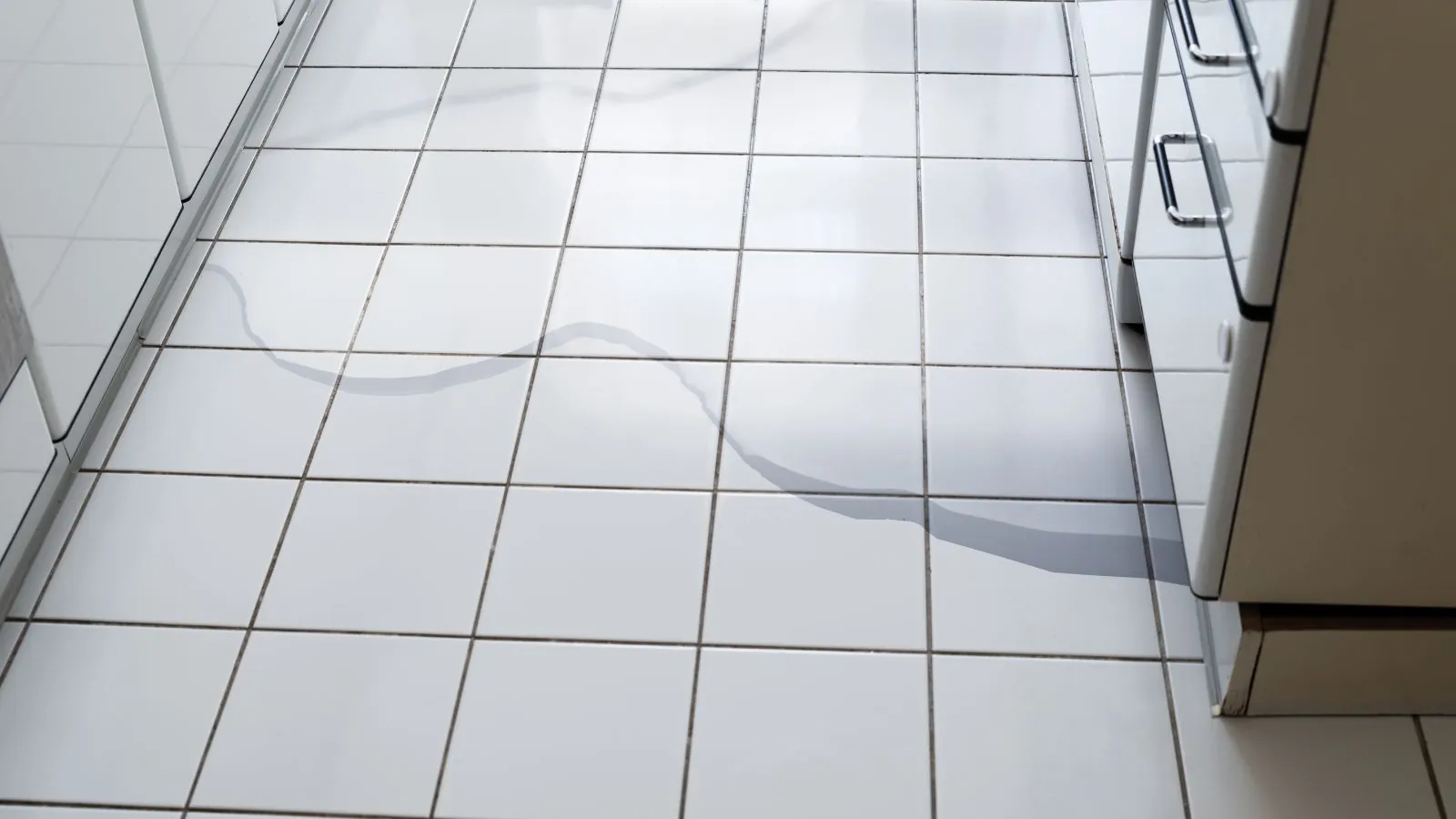
Where kitchen water damage starts
Under-sink supply lines and drains, dishwashers, refrigerator water lines and sink faucet seals account for most kitchen leaks. A slow drip under the sink can go unnoticed for months, soaking the cabinet floor and the subfloor below.
Look for darkened cabinet floors, swollen particleboard, a musty smell when you open the doors, lifted flooring near the dishwasher and discolored caulk at the sink. Check under the sink with a flashlight once a month.
Quick check
Place a dry paper towel at the back of the sink cabinet overnight. If it is damp in the morning, there is a leak.
Cabinets, countertops and what can be saved
Solid wood and plywood cabinets can often be dried if caught quickly. Particleboard and MDF swell and crumble when wet and usually cannot be recovered. Countertops are rarely damaged, but lifting them to replace cabinet bases may be needed.
Toe-kicks are removed to dry under the cabinets, and sections of flooring may be lifted. We document which parts dry in place and which are replaced, so you can plan the rebuild with your cabinet installer.
| Material | Typical result | Notes |
|---|---|---|
| Solid wood cabinet | Often dried in place | If caught within a few days. |
| Plywood cabinet box | Often dried | Edges may swell. |
| Particleboard or MDF | Often replaced | Swells and loses strength. |
| Vinyl or tile floor | Dried; subfloor checked | Water collects under the surface. |
| Laminate floor | Often replaced | Swells at seams. |
Floor soft near the sink?
Call for a survey before the damage spreads.
Water under the floor and behind the walls
Kitchen leaks rarely stay inside the cabinet. Water runs along the plumbing into the wall and down to the subfloor. If the kitchen sits over a basement or crawl space, it can show up in the ceiling or floor framing below.
We check adjoining walls and the area below with a moisture meter. See wall and drywall repair and crawl space water damage if water traveled.
Do not reinstall cabinets or flooring until readings confirm the subfloor is dry. A fast rebuild over a damp subfloor is the usual start of a second repair.
Dishwasher, sink and fridge leaks: how each one spreads
A dishwasher leak usually follows the floor toward the sink base and the kitchen's lowest corner. A sink supply or drain leak soaks the cabinet floor first, then drains down the pipe penetration to the subfloor. A refrigerator line leak can run beneath the unit for weeks, because nobody sees the floor there.
When we survey, we check the cabinet floors, the toe-kick void, the flooring edges, the wall behind the appliance and the ceiling or crawl space directly below. A pin meter on the cabinet backs and a thermal camera across the floor usually reveal the full pattern within an hour.
Appliance-specific causes are covered on the appliance leak page. If your kitchen sits over a finished lower level, ask us to check the ceiling below as well, since that is where kitchen water often shows up first.
Planning the rebuild around a working kitchen
A kitchen out of service is hard to live with. We schedule drying so the sink and stove return to use as soon as readings allow, and we tell you which cabinets can stay in place. In many cases only the base cabinets along the wet wall need to come out.
Talk to your cabinet installer early. Lead times for replacement cabinets can be long, and an installer who knows what is being dried can plan the order of work. Keep every receipt and photo together in one folder; it will save a lot of time later.
What kitchen water damage restoration depends on
Kitchens are small but expensive to rebuild, so what can be dried matters.
Cabinet material
Solid wood often dries, particleboard often does not.
Flooring
Tile, vinyl and laminate respond differently.
Source
Slow leaks soak more than sudden ones.
Wall and ceiling involvement
Adds drying and drywall work.
Rebuild
Cabinet and floor replacement is a separate stage.
How insurance usually enters the picture
A sudden leak is often covered under a homeowners policy, while long-term seepage often is not. Ask your insurer how they treat cabinets and countertops, and keep photos.
For a scope, call (844) 950-6900
Safety steps and the standard behind the work
What to do first: stop the source if it is safe to reach, keep people and pets out of wet rooms, and photograph the damage before anything moves. What not to do: do not touch wet outlets, do not walk through standing water near panels, and do not run a household vacuum on water. Professional drying practice is described in the ANSI/IICRC S500 standard for water damage restoration, which sets out water categories and drying goals. This page is general guidance, and a site visit is what confirms the actual scope.
Questions Cedar City homeowners ask
Sometimes. Solid wood and plywood have a better chance than particleboard. A moisture check will tell.
Not always. It depends on how far the water went and how the cabinets are attached.
Typically several days, with readings deciding when it is finished.
It can if the cabinet and floor stay damp. Quick drying reduces the chance.
No. We dry and restore. A cabinet installer handles replacement.