Why older buildings need a different approach
The Cedar City Historic District was listed on the National Register of Historic Places in 2004, and its buildings date from 1880 to 1954. Not every building in the center of town is part of that district, and a house's age alone does not tell us how it was built.
What age does change is the order of questions. Before drying starts, we want to know what the walls are made of, whether the floors are original, what finishes cover them and whether any past repairs hide moisture. A building that has been patched for decades can have surprises behind a clean wall.
Plaster over lath, tongue-and-groove floors, thick baseboards and old window casings behave differently from modern drywall and laminate. They can often be dried in place when the water was clean and the response was fast, which keeps more of the original material.
| Older material | How water affects it | What we check first |
|---|---|---|
| Plaster and lath | Can soften, stain or detach from the lath | Whether it is firm and still bonded. |
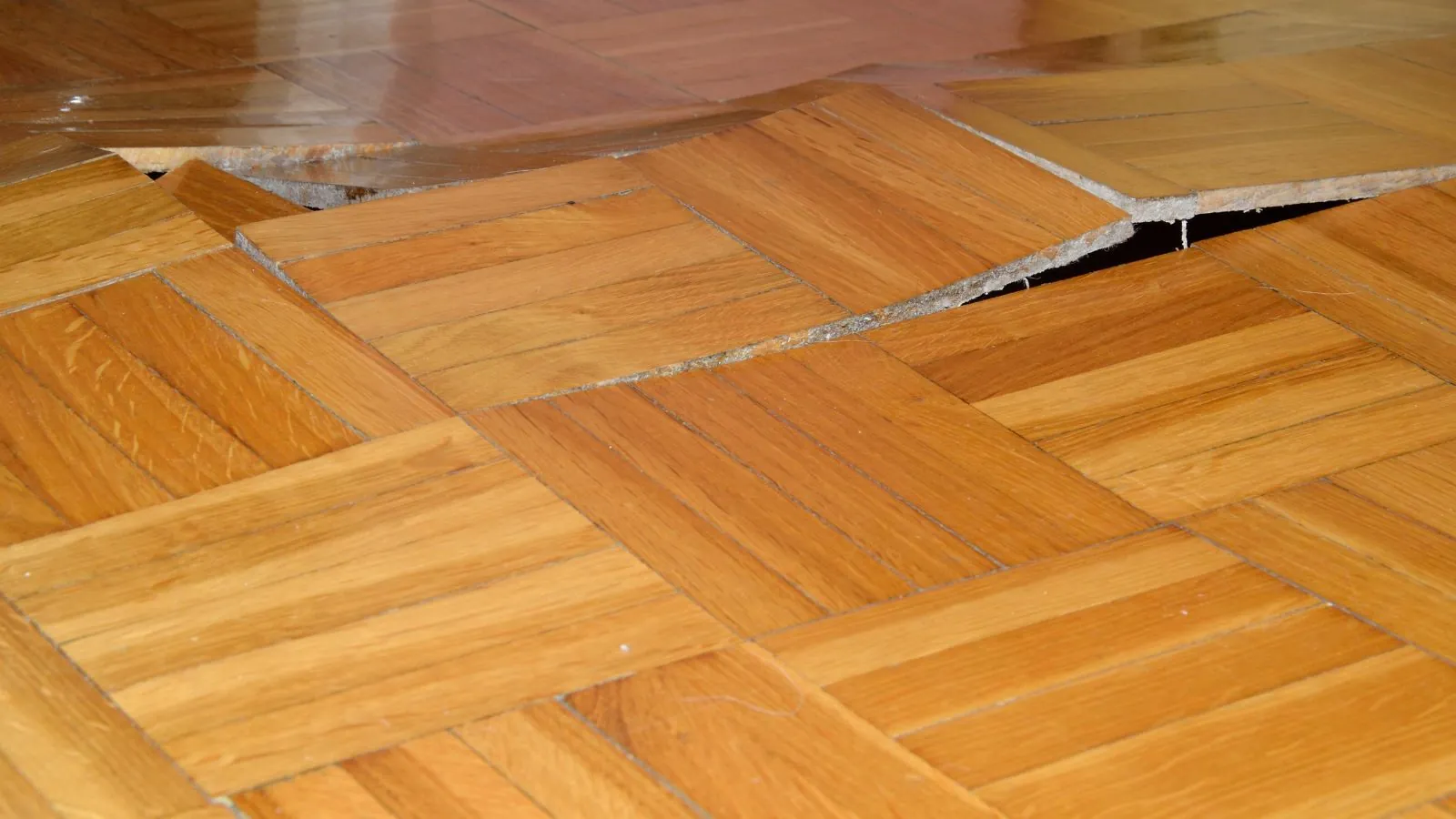
| Solid wood flooring | Cups, buckles or darkens when wet | Moisture reading against a dry reference board. |
| Original trim and casings | Swells and loosens at joints | Whether it can be removed and saved whole. |
| Layered paint | Blisters and flakes | Age of the paint before anyone sands or scrapes. |
Lead paint and old materials: test before you disturb
Paint applied before 1978 may contain lead, and some older building products contain asbestos. Wet paint that is peeling or plaster that is crumbling can release dust when it is scraped, sanded or cut.
If your building is old, ask for testing of suspect materials before demolition or sanding. Testing is done by a qualified lab or inspector, and the result decides how removal should be handled. We do not guess, and you should not either.
Before you touch old finishes
- Keep children, pregnant people and pets away from peeling paint and plaster dust.
- Do not dry-sand or dry-scrape painted surfaces that are wet or damaged.
- Use a damp cloth, not a household vacuum, to pick up loose paint chips.
- Photograph the damage first, then ask about testing.
Not sure what is wet?
Call for a moisture check before you remove trim or flooring.
Common causes in older buildings
Supply lines and drain lines in an older building may have been replaced in sections over the years, so the weak point is often a joint between old and new pipe. Ask a licensed plumber to look at any pipe you cannot identify.
Roof and flashing problems are another source. Water that enters at a chimney, dormer or parapet can travel along framing and show up as a ceiling stain far from the leak. A moisture meter and a thermal camera help trace the path. See ceiling water damage repair for how we work overhead.
Storm runoff matters too. The July 2021 floods showed how quickly water can move through Cedar City streets, and any building with a cellar, window well or low entry can take on water. Our storm water damage page explains the cleanup steps.
We have not verified the FEMA flood-zone status of this neighborhood, so check your own address on the FEMA Flood Map Service Center before you rely on any flood assumption.
Drying, saving what can be saved and documenting for insurance
Our approach is to extract standing water, open the cavities that need air and set up drying equipment, then measure again each day. The goal is to dry materials to the readings a dry reference sample shows. Our structural drying page describes the equipment and the daily readings.
If wood floors are original, we try to save them where readings allow. A buckled floor is not always a lost floor, and sometimes boards settle once they dry. Hardwood floor repair covers when to wait and when to replace.
Keep a photo record of each room, the water line and any loose trim. Ask your insurer how a building of this age is handled for repair and for matching materials, since policies differ. Mold can start within days when materials stay damp, so do not close up walls until they read dry.
If your building sits near campus or the central streets, see also our guide for the area near Southern Utah University. The full list of towns and areas is on the Cedar City service area page.
Safety steps and the standard behind the work
What to do first: stop the source if it is safe to reach, keep people and pets out of wet rooms, and photograph the damage before anything moves. What not to do: do not touch wet outlets, do not walk through standing water near panels, and do not run a household vacuum on water. Professional drying practice is described in the ANSI/IICRC S500 standard for water damage restoration, which sets out water categories and drying goals. This page is general guidance, and a site visit is what confirms the actual scope.
Questions Cedar City homeowners ask
Only some central buildings are. A city planning office or the National Register listing can tell you whether your address is inside the district boundary.
Sometimes, if it is still firm and bonded to the lath after clean water. Soft or crumbling plaster usually has to come off.
If the building is old and the work will disturb painted or plastered surfaces, yes. Ask a qualified lab or inspector before demolition or sanding.
Only if readings require it, and we try to remove trim whole so it can be reinstalled. We will tell you before we do.
It depends on the policy and the cause of the loss. Ask your insurer how repairs and material matching are handled for your building.