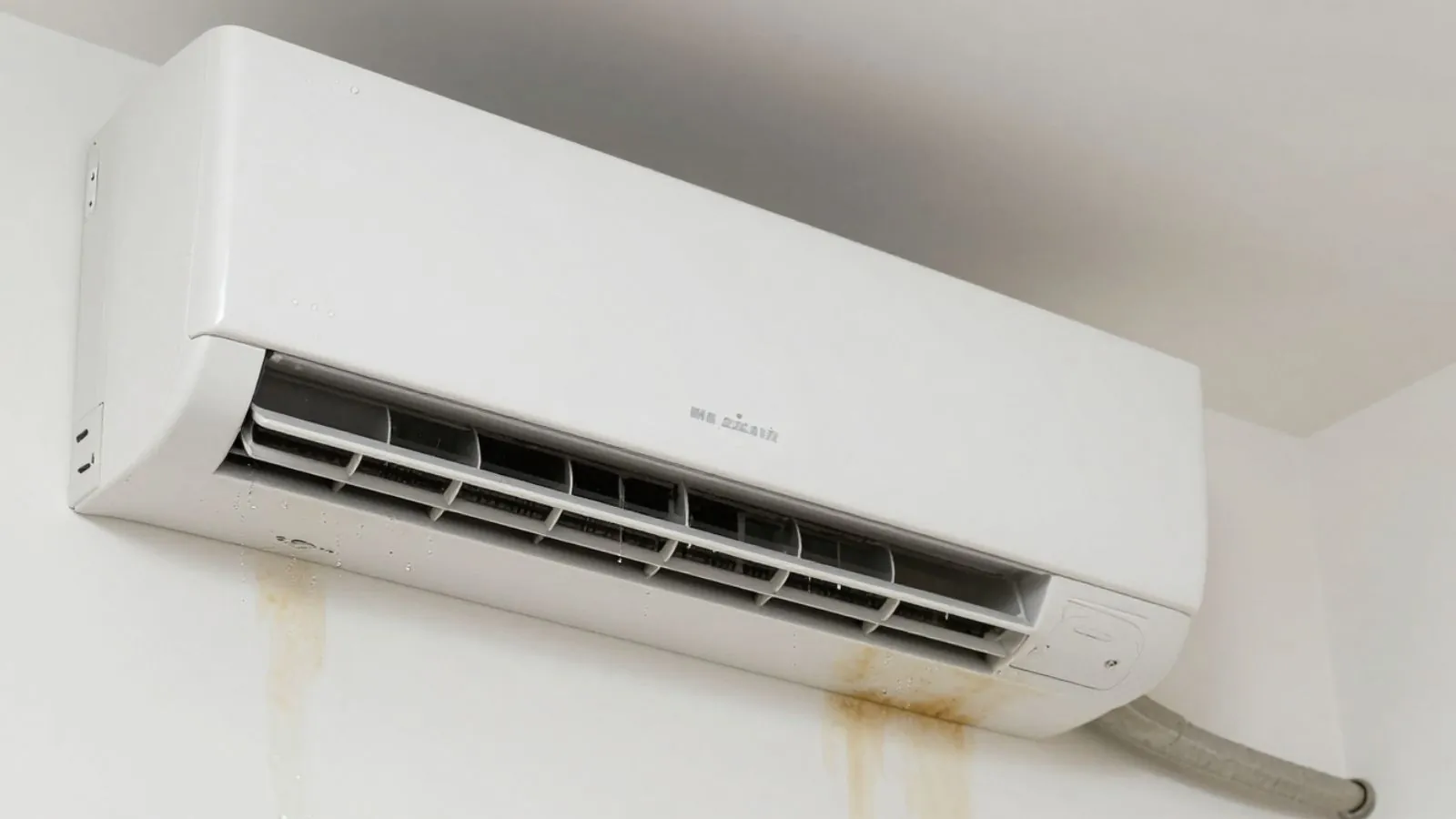
Why air conditioners leak indoors
A cooling system pulls moisture out of the air and sends it down a drain line. When the line clogs with algae and dust, the pan overflows. A frozen evaporator coil can also thaw and flood the pan, and a cracked or rusted pan simply leaks.
Attic and closet air handlers are common culprits. The water runs down into ceilings, through can lights and into walls. Often the first sign is a stain on the ceiling in the hallway or a bedroom, long after the leak started.
If the ceiling is wet
- Turn the system off at the thermostat and the breaker so it stops adding water.
- Avoid using lights near a wet ceiling.
- Place a bucket under drips and call a heating and cooling technician for the fix.
Dry the damage, not just the unit
An HVAC technician fixes the drain, coil or pan. We handle the wet insulation, ceiling board, framing and carpet that got soaked. Do not turn the system back on until the drain is cleared, or the same water will reload.
Because AC leaks are often slow, the damage is frequently older than it looks. We use moisture mapping to find the full wet area. Compare with ceiling water damage and structural drying for the process.
| Sign | Likely source | Who fixes it |
|---|---|---|
| Water in the drain pan | Clogged condensate line | HVAC technician. |
| Ice on the coil | Low airflow or refrigerant issue | HVAC technician. |
| Stain below an attic unit | Overflow or cracked pan | HVAC, then us for drying. |
| Damp closet near the air handler | Slow drain leak | HVAC, then us for drying. |
System switched off?
Call to schedule drying of the wet area.
Evaporative coolers and other local equipment
Many older Utah homes use evaporative (swamp) coolers, which use water by design. Supply lines, floats and drain connections can fail in similar ways, and winterization failures can crack the lines. A leak from a rooftop cooler can soak the ceiling underneath.
Whatever the system, the approach is the same. Stop the water, dry the structure and make sure the fix is in place before the area is rebuilt.
What an AC leak looks like before it becomes a ceiling collapse
The early signs are subtle: a faint yellow ring on a hallway ceiling, a closet floor that stays damp, a musty smell when the system starts, or a pan that keeps filling after you empty it. Systems that cycle on for long summer stretches generate a surprising volume of condensate, often several gallons on a hot day, so a blocked line can fill a pan quickly.
If you see any of these, shut the system off and have the drain cleared. Then ask for a moisture check of the nearby ceiling, because a cooling system that leaked for weeks has usually wetted more than the visible stain.
Pour a cup of diluted vinegar into the condensate line each season if your technician approves, and ask them to check the float switch. A working float switch shuts the system off before the pan overflows, which turns a major loss into a minor one.
What AC leak damage repair depends on
Because these leaks are slow, the scope depends on how far the water went.
Duration
Weeks of dripping affect more material than hours.
Location
Attic units soak insulation and ceilings.
Insulation and board
Wet insulation and sagging drywall are replaced.
Mold risk
Longer wetting raises the chance of surface growth.
Drying time
Slow leaks may leave deep moisture.
How insurance usually enters the picture
Sudden failures can be covered, and long-term seepage often is not. Policies differ, so ask your insurer and keep the HVAC technician's report.
To price yours, call (844) 950-6900
Safety steps and the standard behind the work
What to do first: stop the source if it is safe to reach, keep people and pets out of wet rooms, and photograph the damage before anything moves. What not to do: do not touch wet outlets, do not walk through standing water near panels, and do not run a household vacuum on water. Professional drying practice is described in the ANSI/IICRC S500 standard for water damage restoration, which sets out water categories and drying goals. This page is general guidance, and a site visit is what confirms the actual scope.
Questions Cedar City homeowners ask
Most often a clogged condensate drain, a frozen coil or a cracked pan. An HVAC technician can confirm which.
No. Switch it off until the cause is fixed, or it will keep producing water.
No. We dry and restore the water damage, and your HVAC technician handles the equipment.
It can if materials stay wet for a long period. Quick drying reduces the chance.
Yes. The water source differs, but drying and repair steps are similar.