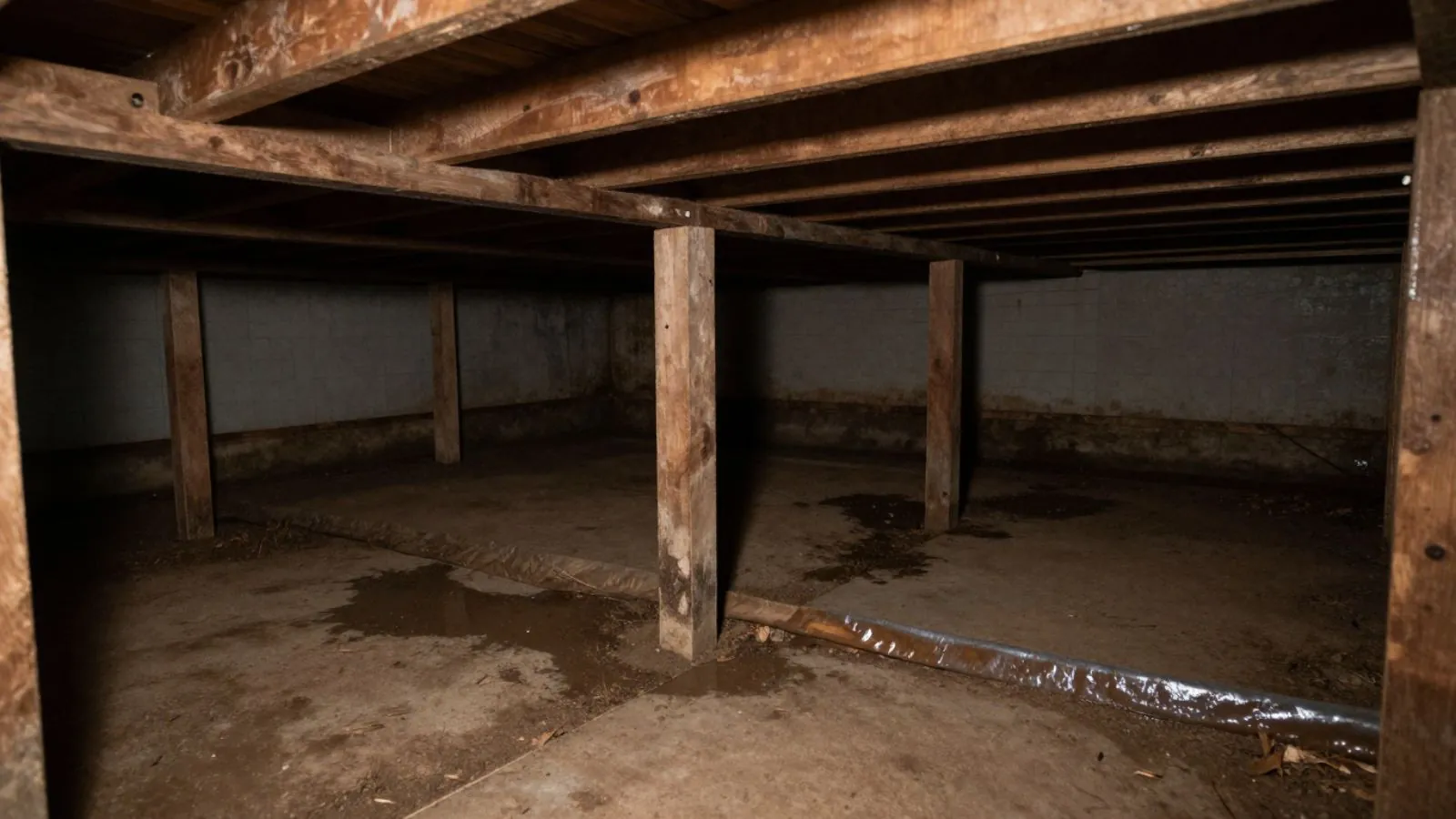
Signs of a wet crawl space
Look for damp soil, standing water, sagging or dark insulation, rusting ducts and a musty smell inside the house. Floors above may feel cold or spongy. In winter, frost on pipes and ice on the vapor barrier point to moisture and cold air.
Take photos from the access hatch if it is safe to look. Do not crawl into standing water or confined spaces near electrical wiring. Water under a house can also hide pests.
Crawl space cautions
- Do not enter if there is standing water near wiring.
- Wear a respirator and gloves if you must look.
- Never work alone in a confined space.
Where crawl space water comes from
Sources include a leaking supply or drain line, runoff against the foundation, a high water table after storms, or condensation. In Cedar City, monsoon cloudbursts in late summer can send water along foundation walls into low areas, and snowmelt can do the same in spring.
Locate the source before drying. If it is a plumbing leak, see burst pipe water damage. If it is runoff, grading and drainage fixes keep it from returning, and those belong to a landscaper or drainage contractor.
| Source | Typical sign | Fix by |
|---|---|---|
| Supply line leak | Water spot under one room | Plumber. |
| Drain line leak | Odor, stained soil | Plumber, possibly sewage cleanup. |
| Surface runoff | Water at the vent wells after storms | Drainage contractor. |
| Condensation | Beaded water on ducts and joists | HVAC or insulation contractor. |
Smell coming from the floor?
Call to have the crawl space checked.
What we do under the house
We pump or extract water, remove wet insulation and any loose debris, dry the joists and subfloor with air movers and a dehumidifier, and record moisture readings. A vapor barrier, if damaged, is flagged for repair.
Exposed framing can be treated or cleaned depending on its condition, and we document what is found. Work then continues as described under structural drying.
What a wet crawl space does to the rest of the house
Air rises through a house, so moisture and odor under the floor end up upstairs. A wet crawl space raises indoor humidity, rusts ducts and fasteners, and gives mold a place to start on joists and subfloor. Rodents and insects also find damp, insulated spaces attractive.
Fiberglass insulation that has gotten wet sags, loses its insulating value and stays damp. It is usually removed instead of dried. Replacing it after the space is dry restores comfort and cuts utility costs.
A vapor barrier on the soil limits moisture coming up from the ground. If yours is torn or missing, tell us, since it affects how quickly the space dries and whether it will stay dry.
What we need from you before we come
Tell us where the access hatch is, whether you have seen standing water, and whether any pipes or ducts run through the space. If a plumber has already been there, share what they found. Photos from the hatch are useful if you can take them safely.
Clear the area around the hatch and secure pets. We will bring lighting and protective gear, and we will walk you through what we found before any work begins.
What crawl space water damage cleanup depends on
Crawl space work is mostly about access and extent.
Access
Low clearance slows every task.
Water depth
Standing water must be pumped out first.
Insulation
Wet batts are removed and replaced.
Duration
Long exposure affects framing and may require treatment.
Source repair
Plumbing or drainage fixes are separate.
How insurance usually enters the picture
Coverage depends on the cause. Sudden pipe failures are often covered, while seepage and groundwater often are not. Check your policy and ask your insurer.
To arrange an inspection, call (844) 950-6900
Safety steps and the standard behind the work
What to do first: stop the source if it is safe to reach, keep people and pets out of wet rooms, and photograph the damage before anything moves. What not to do: do not touch wet outlets, do not walk through standing water near panels, and do not run a household vacuum on water. Professional drying practice is described in the ANSI/IICRC S500 standard for water damage restoration, which sets out water categories and drying goals. This page is general guidance, and a site visit is what confirms the actual scope.
Questions Cedar City homeowners ask
Yes. If water is entering quickly, call the 24/7 line.
It is better to remove it. Water sitting under the floor raises humidity and can damage framing.
It can, since damp wood and insulation support growth. Drying and fixing the source reduce the risk.
Restoration is not waterproofing. We dry and clean, and a drainage specialist can address long-term control.
It depends on moisture levels and equipment, and readings decide when it is done.