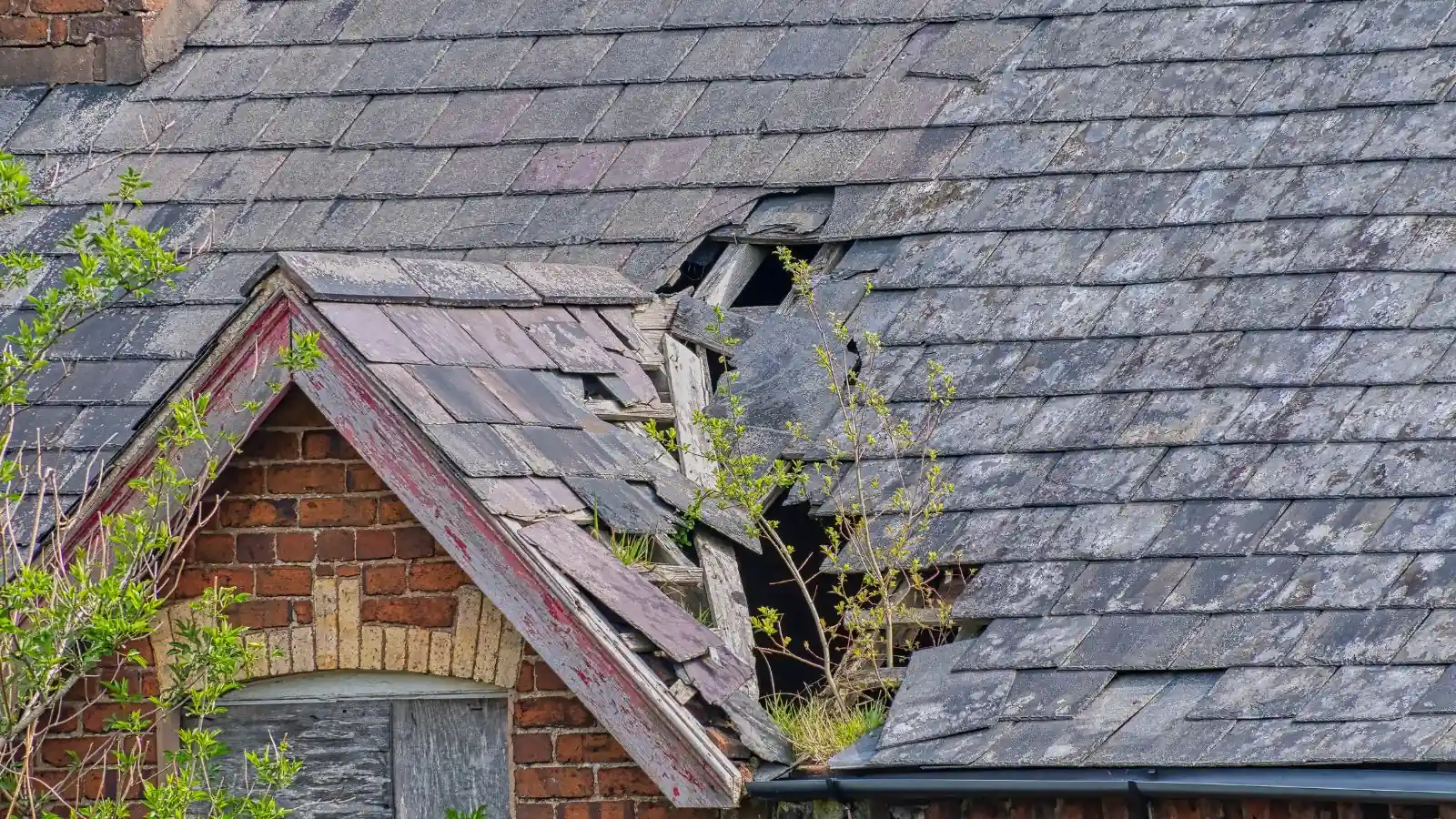
What storms do to Cedar City buildings
Summer monsoon cloudbursts and winter storms put different stress on a building. In July and August 2021, more than ten flash floods came down Coal Creek, and several rainfall events exceeded the 100-year rate for Cedar City and Enoch, according to a Utah Geological Association summary. Wind-driven rain forces water in around windows and doors, and roofs shed it faster than gutters can carry.
Winter adds snow load, ice dams and rapid melt. Water backs up under shingles, runs into walls and appears as ceiling stains days later. Check the attic after any large storm.
During and after a storm
- Stay away from downed power lines and any water that might touch them.
- Do not enter flooded basements or garages with the power on.
- Avoid driving through flooded streets, and keep children out of runoff.
Neighborhood notes: see storm runoff near Fiddlers Canyon.
Roof and envelope damage first
If the roof is open or shingles are missing, a temporary tarp reduces further wetting. A roofer or a tarp service handles that. If you are not comfortable on a wet roof, do not climb up. Photograph damage from the ground.
Inside, we dry the areas the water reached: ceilings, walls, insulation and floors. See ceiling water damage repair for roof-leak details, and flood damage cleanup if the water came in at ground level.
| Storm effect | Where water enters | Typical first step |
|---|---|---|
| Wind-driven rain | Windows, doors, wall penetrations | Towels, photos, call for moisture check. |
| Roof damage | Shingles, flashing, vents | Temporary tarp, then interior drying. |
| Runoff | Garage doors, window wells, low doors | Pumping and extraction. |
| Snowmelt | Foundation, ice dams | Attic check, crawl space and basement check. |
Storm still going?
Call now so a crew is queued before the rush.
Cleaning up after the storm
Storm water carries soil and debris, so it is treated as contaminated until assessed. Porous materials that sat in it are generally removed. Hard surfaces are cleaned and disinfected, and the structure is dried.
Sort the damage into storm-related and pre-existing before you call your insurer. An adjuster will separate them anyway, so your photos from before the storm, if you have them, are valuable.
Do not wait for the weather to settle completely. Calling during the storm lets us queue your job and give instructions to limit damage while you wait.
What to photograph and write down
Before you move anything, take wide shots of each wet room, then close-ups of the water line, the entry point and damaged contents. Add a short note of the time the water entered and what you did to limit it. These notes matter because storm claims are often judged on what was sudden and what was already worn.
Keep receipts for emergency purchases such as plastic sheeting, towels or a rental pump. Ask your insurer which expenses they reimburse. Do not throw out damaged items until the adjuster has seen them or has told you photographs are enough.
Prepare your house before monsoon season
Clear gutters and downspouts, extend downspout outlets away from the foundation, check window wells and cover them if possible, grade soil to slope away from walls, and test your sump pump if you have one. A short guide is in prepare your home for monsoon storm season.
Keep a basic kit near your main shutoff: flashlight, gloves, plastic sheeting, tape and our number. None of this prevents every loss, but it shortens your response time.
What storm water damage cleanup depends on
Storm jobs vary with how much water entered and how long it sat.
Entry point
Roof leaks and ground-level water need different work.
Volume
More water means more pumping and removal.
Contamination
Runoff is contaminated; roof water is often cleaner.
Materials
Carpet, insulation and board may be replaced.
Surge demand
After large storms, scheduling is tight.
How insurance usually enters the picture
Wind and rain damage is commonly covered, while rising surface water and groundwater usually are not without separate flood coverage. Review your policy and ask your insurer about deductibles for storm events.
To discuss yours, call (844) 950-6900
Safety steps and the standard behind the work
What to do first: stop the source if it is safe to reach, keep people and pets out of wet rooms, and photograph the damage before anything moves. What not to do: do not touch wet outlets, do not walk through standing water near panels, and do not run a household vacuum on water. Professional drying practice is described in the ANSI/IICRC S500 standard for water damage restoration, which sets out water categories and drying goals. This page is general guidance, and a site visit is what confirms the actual scope.
Questions Cedar City homeowners ask
Yes. Storms rarely respect business hours. Call the 24/7 line and describe where water is entering.
No. Call while it is still going so a crew can be assigned and you can get safety instructions.
It starts relatively clean but picks up insulation and debris. A technician will assess.
Wind and rain damage is often covered, while flooding typically requires separate coverage.
A roofer handles the roof. We dry the interior and coordinate with the roofer.