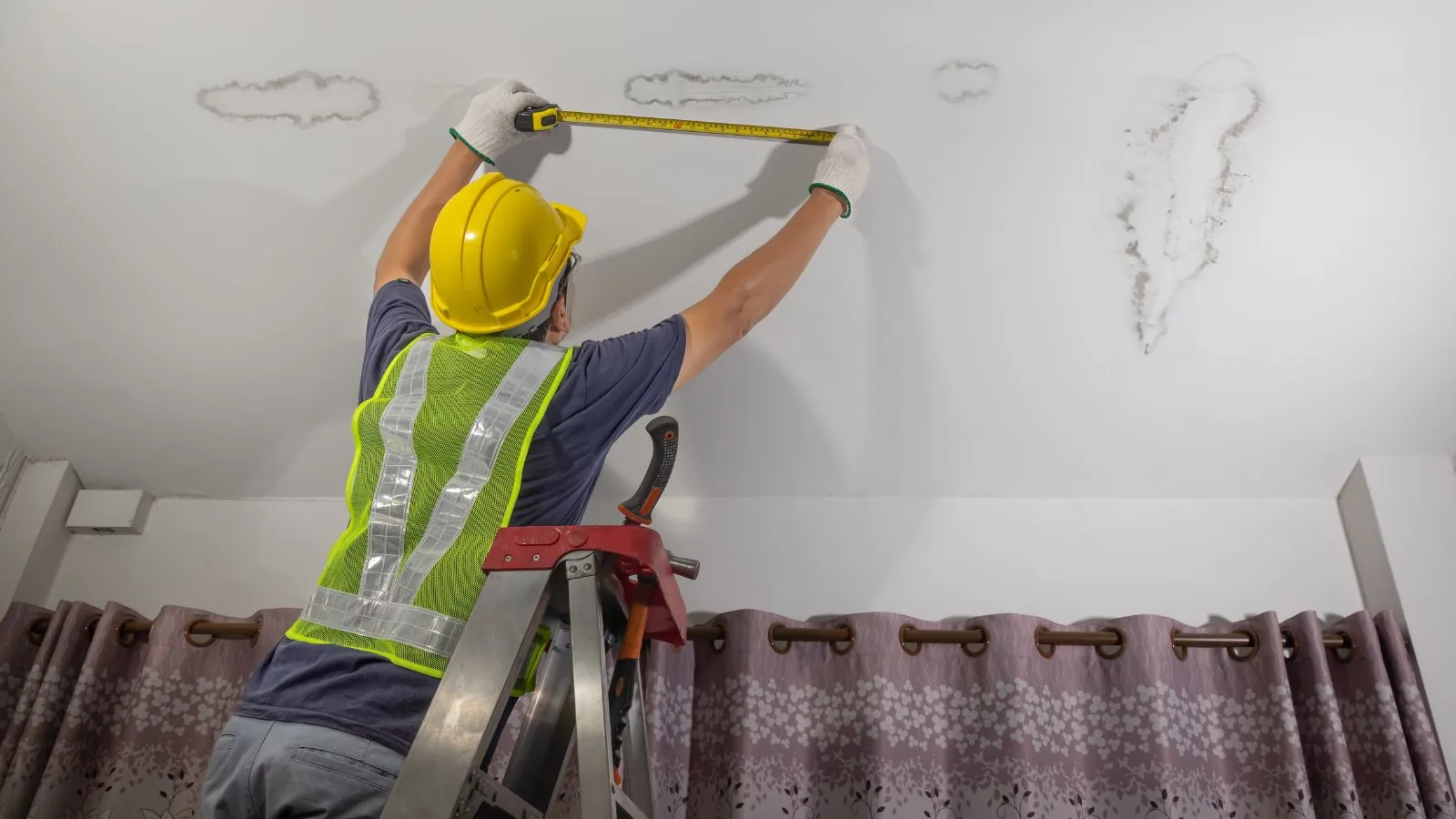
What is different about a commercial loss
Commercial buildings have larger floor areas, shared walls, suspended ceilings, specialized flooring and stock, equipment or records that cannot simply be moved to another room. They also often involve a landlord, a tenant, a property manager and more than one insurance policy.
Because of that, the first call includes questions about who owns what: the building, the contents, the improvements. Knowing this early lets us write a scope that matches how the claims will be filed.
First steps for a business
- Shut off water at the main and cut power to wet areas only if you can do it safely.
- Move inventory, files and electronics up off the floor, and photograph them first.
- Keep customers and staff out of wet or ceiling-sagging areas.
Keeping the doors open where possible
A phased plan splits the building into zones. The wet zone is isolated with containment and dried, while dry zones stay in use. Equipment placement and noise are planned around your hours, and in some cases drying runs overnight.
This works best when the loss is contained to a back room or a single suite. A loss that spreads through a shared ceiling or a slab may require a longer closure, and we say so up front instead of promising a reopening date.
| Building type | Common water source | Typical concern |
|---|---|---|
| Retail shop | Supply line, roof, sprinkler | Stock, flooring, customer access. |
| Restaurant | Dishwasher, grease trap, supply | Health inspection, drain backups. |
| Office | Roof leak, HVAC, restroom | Computers, files, ceiling tiles. |
| Rental property | Upstairs unit, appliance, pipe | Multiple tenants, responsibility. |
| Warehouse or shop | Roof, storm, slab | Large floor area, equipment. |
Need to reopen fast?
Call and ask about phased work that keeps part of the space usable.
Cedar City businesses and the water that reaches them
Commercial buildings in Cedar City range from older downtown buildings to newer retail, and plumbing, roofs and below-grade space differ building by building. Ask your property manager about supply line materials, past leaks and roof drain upkeep.
Larger commercial buildings often have flat roofs and rooftop HVAC. Monsoon cloudbursts can overwhelm roof drains and scuppers, and water then finds its way through roof penetrations. Ask your property manager how often drains are cleared.
Southern Utah University and the seasonal visitors who come for the Utah Shakespeare Festival keep rentals, lodging and event spaces in steady use. A loss in a short-term rental or event venue has its own timing pressures, so give us the booking calendar when you call.
Documentation and working with insurers
Commercial claims depend on documentation. We record photos, moisture maps, a list of materials removed, and daily drying logs. For multi-tenant buildings, we can separate scopes by suite so each policyholder has their own record.
Ask your agent early whether business interruption coverage applies, since that is a different part of the policy from property damage. We do not decide coverage, and we do not negotiate your policy. We provide clear records that your adjuster can work from.
What commercial water damage restoration depends on
Commercial scope is set after a site walk, since building size and use vary widely.
Square footage
Larger floors need more equipment and days.
Finishes
Commercial carpet tile, vinyl, ceiling tile and drywall each dry differently.
Occupancy needs
Phased work and after-hours drying add coordination.
Water category
Clean, gray or sewage water change the scope.
Documentation
Multi-suite or multi-policy buildings need separate records.
How insurance usually enters the picture
Commercial property policies, tenant policies and landlord policies often split responsibility. Read each, and ask your agent which applies to the building, improvements and contents.
To arrange a site walk, call (844) 950-6900
Safety steps and the standard behind the work
What to do first: stop the source if it is safe to reach, keep people and pets out of wet rooms, and photograph the damage before anything moves. What not to do: do not touch wet outlets, do not walk through standing water near panels, and do not run a household vacuum on water. Professional drying practice is described in the ANSI/IICRC S500 standard for water damage restoration, which sets out water categories and drying goals. This page is general guidance, and a site visit is what confirms the actual scope.
Questions Cedar City homeowners ask
Yes. Dispatch is around the clock, and we can start overnight so your business reopens sooner.
Often, in the dry zones. We plan containment and equipment placement around your hours.
Yes. We can provide separate records for owners, tenants and managers.
Move what you can to a dry area, photograph it, and tell us about anything that needs special handling.
It depends on your policy. Ask your agent, and keep records of closures and lost revenue.