The short version
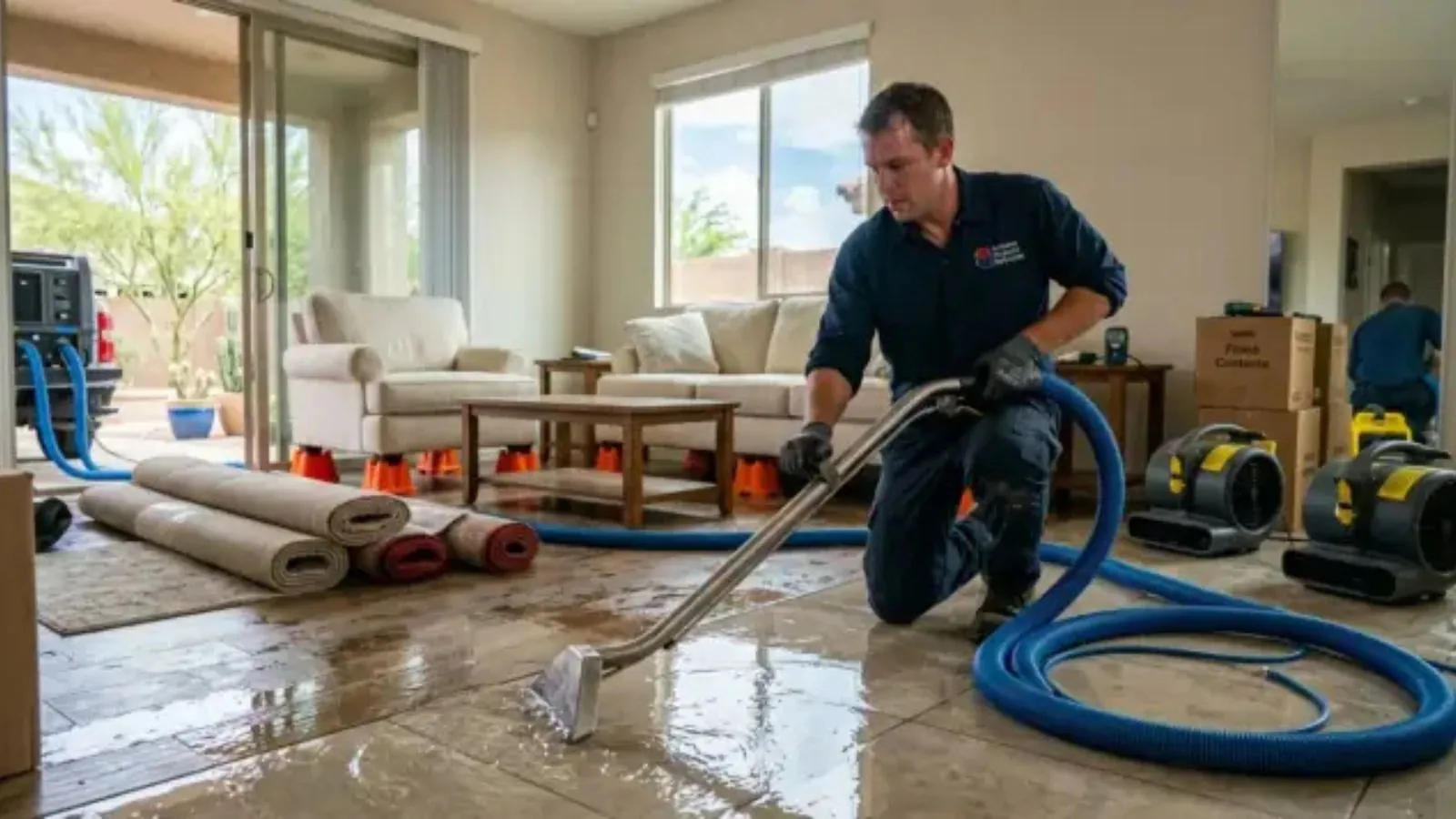
Mitigation stops further damage: shutting off the source, extracting water, removing unsalvageable material and drying the structure. Remediation usually means cleaning or removing a contaminant, such as mold, sewage or hazardous material. Restoration returns the building to its pre-loss condition, which includes the rebuild: drywall, paint, flooring and trim.
In practice, water damage restoration companies do the first stage and often the last. Some do all three, others hand the rebuild to a general contractor. What matters is that each stage is in the scope, priced and described.
| Term | Typical meaning | Examples |
|---|---|---|
| Mitigation | Stop the loss and prevent more damage | Extraction, tear-out, drying, tarping. |
| Remediation | Remove or neutralize a contaminant | Mold removal, sewage cleanup, disinfection. |
| Restoration | Rebuild to pre-loss condition | Drywall, paint, flooring, cabinets. |
| Cleanup | Everyday word covering any of the above | Pump-out, wipe-down, disposal. |
Where the lines blur
Contractors market with whichever word they think searchers use. A company that says remediation may mean water extraction, mold removal or both. A company that says restoration may include only drying, with no rebuild. Do not rely on the label. Read the scope.
Insurance adds another wrinkle. Adjusters often separate emergency services, which cover mitigation, from repairs, which cover the rebuild. The two may be paid at different times and by different line items, and they may be done by different companies.
If mold is involved, the terms shift again. Mold remediation is a specialty with its own protocols and testing, and some jurisdictions license it separately. Ask who does the work and what training they hold.
Want a plain-language scope?
Call and ask for the stages listed separately.
How a loss moves through the stages
- Emergency response: stop the source and make the space safe.
- Mitigation: extract water, remove wet materials, set drying equipment.
- Monitoring: daily readings until the structure meets the dry standard.
- Remediation where needed: cleaning and disinfection, or mold removal.
- Restoration: rebuild with new insulation, board, paint and flooring.
- Closeout: final inspection, documentation and walkthrough.
Notice that restoration comes last. Rebuilding before the structure is dry is the classic mistake, and it is why the drying log matters. See structural drying for what that log should contain.
Why the distinction matters for your wallet
A contractor who bundles everything into one lump sum can make it hard to compare bids. Another who prices mitigation on equipment and days, and the rebuild on materials and labor, gives you something to check. Ask for separate lines.
The distinction also matters when you choose who does what. You might use a mitigation company for the emergency and a general contractor for the rebuild, particularly if you already have a contractor you trust. Mitigation can usually begin the same day, while rebuild planning, permits and material orders take longer.
For the rebuild stage, see what an estimate should include and how to read a scope of work.
A worked example: one bathroom supply line failure
Take a supply line that fails under a second-floor bathroom sink on a Friday night. Mitigation is the same-night visit: shut the valve, extract water from the bathroom floor and the kitchen ceiling below, cut out wet ceiling board and insulation, and set air movers. The cost line is equipment and labor.
Remediation enters only if something extra turns up, for example mold found on the back of the vanity wall after demolition. That gets a separate containment and cleaning step. Restoration is the follow-up: new ceiling board, texture, paint, flooring and vanity trim, scheduled once the readings are dry.
Seeing it this way, you can read a bid for the same job. If a quote lists only extraction and drying, it may be a mitigation-only bid. If it lists everything through paint, it covers restoration. If it adds mold work with no evidence of mold, ask why.
How insurers usually split the work
Many adjusters write an emergency services estimate first, covering mitigation and drying. The repair estimate follows once the structure is dry and the scope is clear. That is why the first invoice is often paid before any rebuilding is planned.
The split is useful. It lets you hire the best fit for each stage and keeps the urgent work moving while repair choices are made. The split also means the two estimates need to agree on which rooms and materials are in play, so ask both parties to share their lists.
Questions to ask before you sign
- Which stages are included in this price, and which are not?
- Who performs the rebuild, and are they licensed in Utah for that work?
- How will moisture be measured and documented?
- What happens if drying takes longer than planned?
- Is mold testing or remediation part of the scope, or only if found?
- How are changes to the scope approved and priced?
A local note for Cedar City homeowners
Utah requires contractors to be licensed through the Division of Occupational and Professional Licensing for most construction work, and licensing categories differ by trade. A company doing only drying may hold different credentials from one doing structural rebuilds.
Practical takeaway: ask for the license classification and number in writing before work begins, and check it on the state's lookup tool. This is a five-minute step that tells you who is legally allowed to do which part of the job.
What to do and what not to do while you decide
What to do: document the damage, protect valuables and write down dates and times. What not to do: do not touch wet electrical equipment, and do not assume a dry surface means a dry structure. The ANSI/IICRC S500 standard for water damage restoration is the industry reference for water categories and drying goals. This article is general information and does not replace advice from your insurer, a licensed plumber or an electrician.
Questions Cedar City homeowners ask
No. Restoration rebuilds to pre-loss condition, while remediation usually removes a contaminant such as mold or sewage.
Mitigation is the work that stops further damage, such as extraction, removal of wet materials and drying.
Often yes. Mitigation comes first, followed by repairs. Some losses also need remediation.
Many do mitigation and some also rebuild. Ask what they handle and what they subcontract.
Utah licenses many construction trades. Ask for a license number and verify it with the state before work starts.