Questions to ask on the first call
- Do you answer the phone at night and on weekends, and who comes?
- How soon can a crew be on site, and what do they bring?
- Do you hold a Utah contractor license for the work, and what is the number?
- Can you provide proof of liability insurance?
- Will you give me a written scope before work starts?
- How do you measure and document drying?
Licensing, insurance and training
Utah requires licensing for most contractor work. Ask for the license classification and number and check it with the state. Ask for a certificate of insurance showing general liability. Training in water damage standards, such as the IICRC S500 framework, is a plus, but ask what a technician has completed and when.
Do not rely on logos alone. Anyone can paste a badge on a website. Checking a state license takes minutes and tells you whether the company can legally do the work.
| Check | How | Why |
|---|---|---|
| License | State lookup by number | Legal to perform the work. |
| Insurance | Certificate of insurance | Covers damage by the crew. |
| References | Call two recent customers | Shows how they handle problems. |
| Reviews | Read several, look for patterns | Single reviews can mislead. |
Want to compare?
Call and ask us any question on this list.
Response time and honest promises
Be wary of exact arrival guarantees, since traffic, storms and other emergencies change them. A good company explains how fast it can realistically get there and gives you something useful to do while you wait.
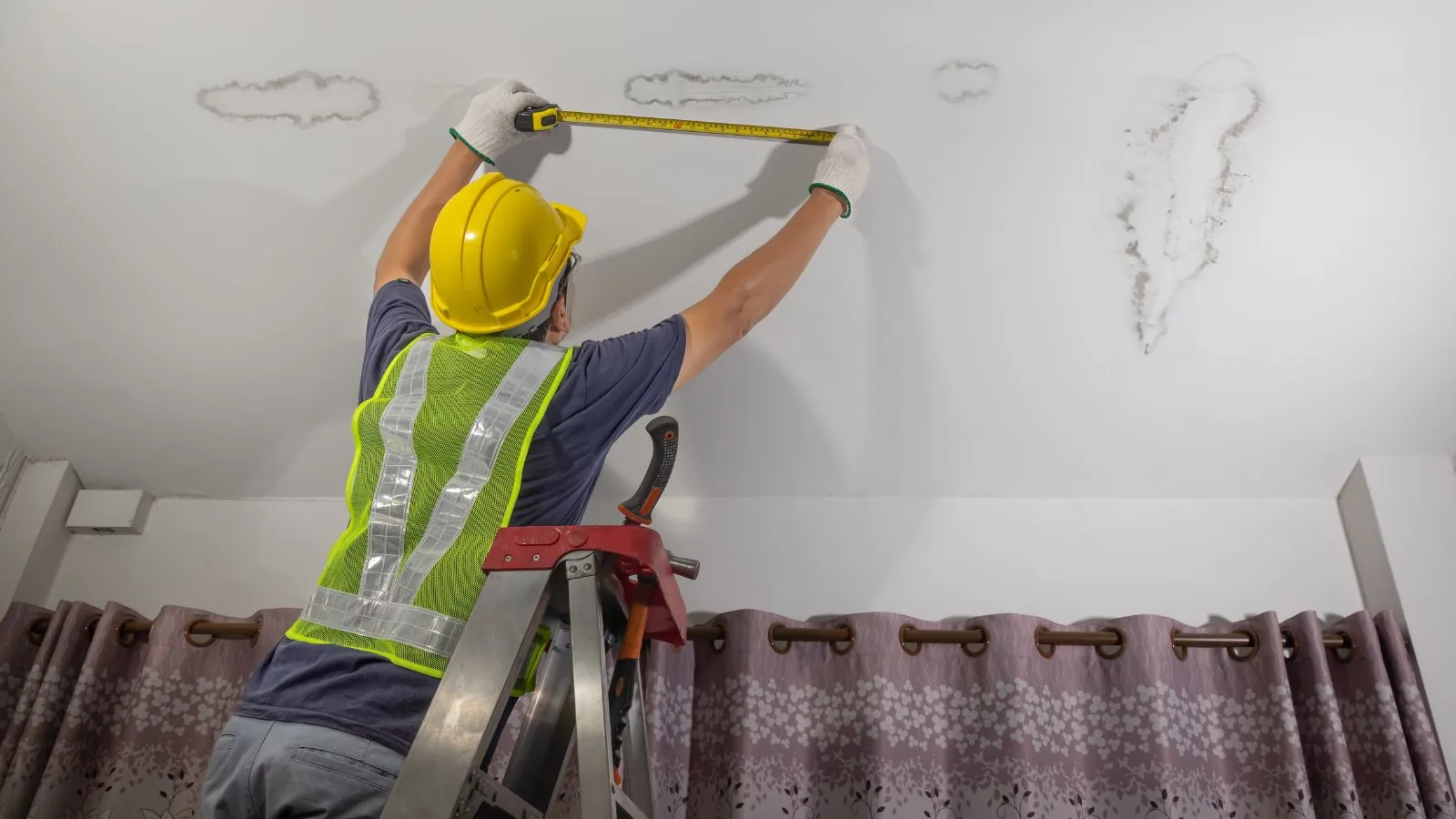
Ask what the first visit includes. A proper first visit should involve a moisture survey with instruments, a decision on water category and a written plan, not just fans put on the floor.
Pricing, deposits and insurance
Ask how pricing works: by the hour, by equipment and day, by square foot or a combination. Request line items, as discussed in what an estimate should include. Be careful with large deposits and with contractors who say the insurer will cover everything.
A company that works with your insurer should document well and communicate clearly, not promise coverage. Read the scope using how to read a scope of work.
Calling more than one company without wasting time
If water is actively flooding, call one company right away to stop the damage. If it is a smaller or slower loss, call two or three, and ask each the same questions so you can compare. Write down the name of the person you spoke to, the time you called and what they promised.
A good dispatcher asks questions about the source, the water, the building and the people at home. If the first thing you hear is a price, treat it with caution. Responsible pricing needs information about the job.
Pay attention to tone. A company that explains patiently, offers safety tips and is clear about what it does not know is more likely to treat you well on site.
A one-page script for the call
- Say what is wet, where the water came from and whether it is still running.
- Ask how soon a crew can arrive and who will be on it.
- Ask for the license number and proof of insurance.
- Ask what the first visit includes and how readings are taken.
- Ask how pricing works and when you will see it in writing.
- Ask who you can call after hours if something changes.
Write the answers on a sheet of paper with the company name at the top. If you call a second company, use the same sheet. The comparison becomes obvious in a few minutes, and you have a record if there is a dispute later.
Keep calm on the call. A company that rushes you off the phone, or one that cannot answer simple questions, has told you what you need to know.
What happens after you hire
Expect a walkthrough, moisture readings, a written scope, an authorization to begin and then work. Ask for a daily plan and a contact person. At the end, expect a final readings sheet, an invoice that matches the scope, and a walkthrough.
Keep the drying log and photos. If something goes wrong later, such as a new stain or smell, call right away and refer to the readings. A trustworthy company stands behind its work and returns to check it.
If you ever feel pressured, step back. Mitigation is urgent, but a few minutes to read a document is not a delay. A good company will wait.
Warning signs
- Door-to-door solicitation after a storm.
- Pressure to sign immediately.
- No written scope or no license number.
- Refusal to explain the water category.
- A demand for full payment up front.
- A request to sign your insurance check over.
A local note for Cedar City
After large storms, out-of-area crews often travel into southern Utah looking for work. Some are excellent and some are not, and follow-up on warranties and call-backs is harder when a company is far away.
Practical takeaway: ask where the crew lives, how far the office is and who will answer if you call back in a month. A local phone line and a named project lead are good signs.
What to do and what not to do while you decide
What to do: document the damage, protect valuables and write down dates and times. What not to do: do not touch wet electrical equipment, and do not assume a dry surface means a dry structure. The ANSI/IICRC S500 standard for water damage restoration is the industry reference for water categories and drying goals. This article is general information and does not replace advice from your insurer, a licensed plumber or an electrician.
Questions Cedar City homeowners ask
Use the state licensing lookup with the company name or license number.
Not necessarily. Compare scopes, not only totals.
Be cautious. Verify the license, insurance and references before agreeing.
Ask for a physical address, a local phone number and the name of the crew lead.
Moisture readings, a water category assessment and a written plan.